16 April 2011

Positivo Espresso Europe (PEE) Training Camp Mallorca

Ups, just noticed that this is the 1.000th post on this blog, so I better write something good.

Juliane, David and me travelled in late March to the island of Mallorca where we hold the traditional PEE spring training camp (since 2011). It is impossible to recount all the things we did there, but basically we slept, drank, ate and rode our bikes. Mainly the last one. We also hat a lot of good food. Within one week we rode 750 km and more than 10.000 elevation meters. We left the island one day before pure exhaustion would have prevented us to travel at all.

I had a lot of prejudices about Mallorca before arriving. In particular I thought that this is a part of Germany, where the elderly and the drunk terrorize the Aborigines. Wrong. This is a wonderful island with mountains, ocean, sun (MOS), perfect roads and friendly people. There were hundreds of cyclists out on the roads, mostly Germans, but also some Austrians, Swiss and Norwegians.

David with 5 litre water bottle.
Rest day (accidentally). On the beach.
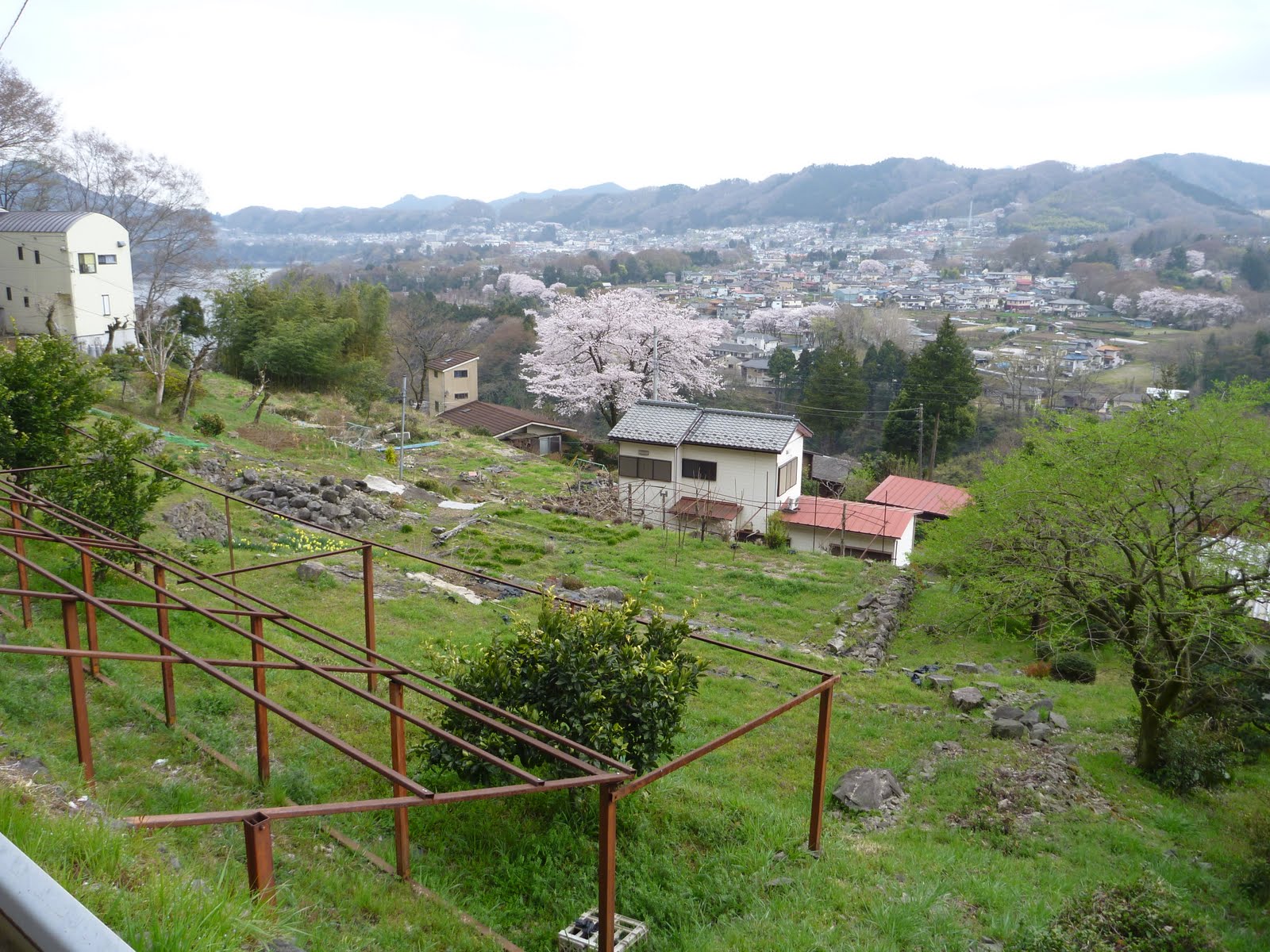
Coastline at cape formenta or so.
Most importantly, after Mallorca we felt much more confident about tackling the Transalp in summer.
Picnic somewhere in the mountains,. Please note the red shotgun cartridge.
Juliane in good mood with 1 litre water bottle.
Last ride for my Cervelo. Frame is broken. The perfect spot for bicycle suicide.
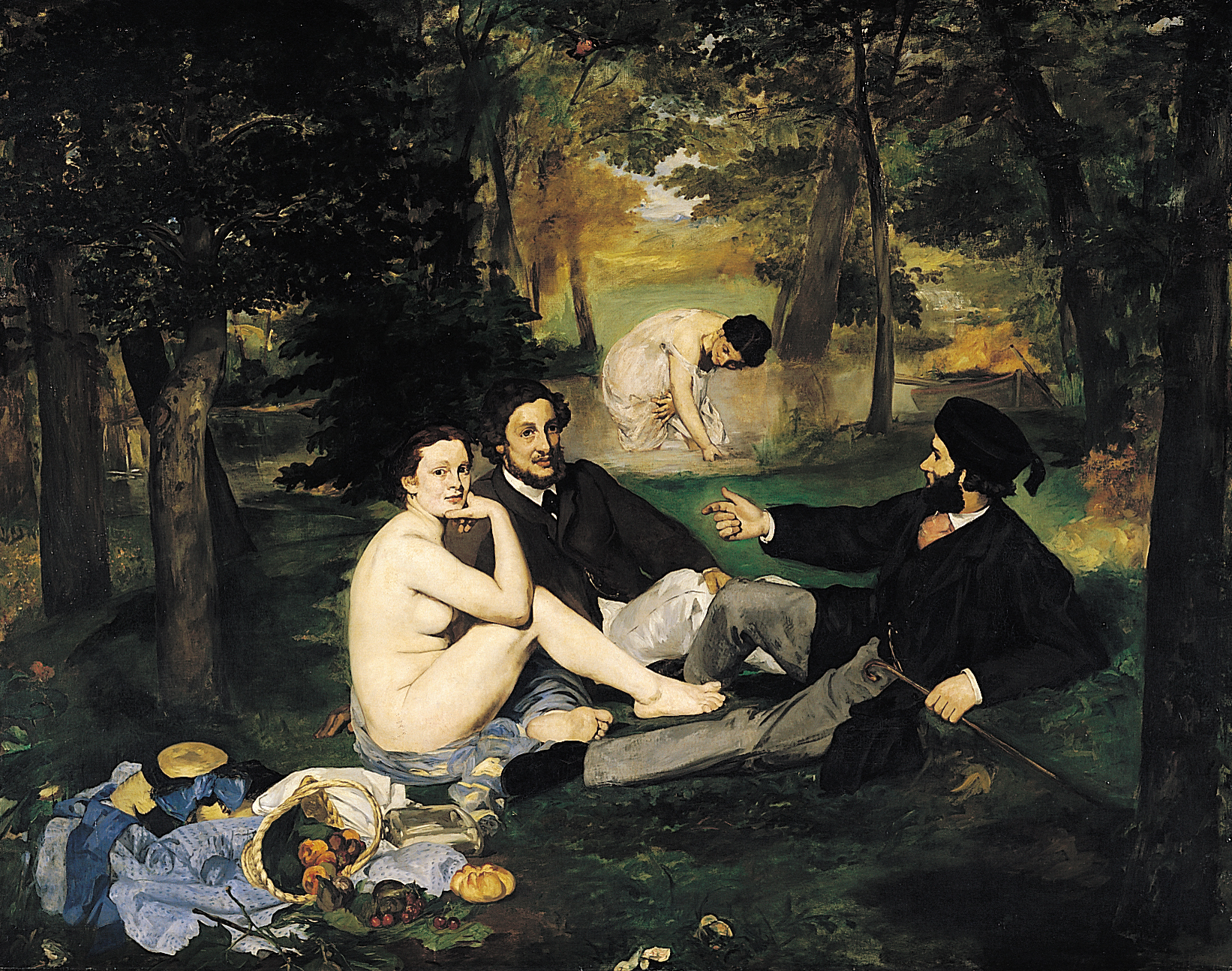
Eduourd Manet: Le dejeneuer sur l'herbe. Or perhaps BowWowWow.
David, too fast for the rest of us.
Juliane, climbing.

Close to the Col des Reines, 682m. The road down to the sea on teh otehr side is spectacular.

Deia. Before lunch.

Mountain roads on Mallorca.

Wow.

J

Riding down to the sea. David.

Same. Juliane.


Mob racing with David, a close second.

11 April 2011

Hell of the North, Fog of the East


April 10, 2011 saw the 109th edition of one of the great events in all of cycling, Paris-Roubaix.  Johan Van Summeren, of Team Garmin-Cervelo, rode in a lead group, "beyond the peleton" as it were, and managed a solo victory as the race over the bike-busting, wheel devouring broken cobblestones and mud of Northern France lived up to its nickname as "The Hell of the North."

I had Paris-Roubaix on my mind as I headed out early on my Cervelo, complete with Garmin, and attacked the "pave" of Hachioji.  It was warm in Tokyo, even at 6:30 AM, with a forecast for sunny skies and a high temperature of 18 degrees C (approximately 64 F).  I figured I would try Wada Pass via the forest road, then Tawa, and Tsuru Passes via Uenohara and along Rte 18, then make a decision about where to go from Kosuge - Mura, whether Matsuhime, Kazahari, or maybe even Imagawa and Yanagisawa.  It would be, for me, a big day of training.  The sakura were in full bloom along the river and hillsides.

The weather, however, disappointed.  My sunglasses started to fog up as I climbed Wada, not from my breath, but just from the wet and clammy air.  My rear tire slipped on the grate covers and mossy sections -- a problem largely solved if I watched for trouble spots and remained in the saddle at key points.  I had brought glove liners, thin arm and leg covers, and a thin vest, but was missing a jacket, a warm cap, toe covers or winter socks.  Still, after the descent, in Uenohara at my first stop, I warmed a bit and figured it had just been early morning cold that I encountered on Wada, and surely things would warm up with the day.

So I headed out of Uenohara and then onto Rte 18 over Tawa and Tsuru Passes, again greeted by clouds, fog and cold, as well as a damp road surface higher up.  At the base of Matsuhime Pass, I considered making a right turn, heading down into Kosuge Mura, to the day-trip hotspring, then on to enjoy a quick lunch at Yakyu Tei and home via Oume.  That would have been a wimp out. 

Instead, inspired by the gods of cycling then preparing for the cobblestones, and Mario Cipollini's recent comments, I "manned up", turned left and made the climb, much of it in the fog. The temperature indicator about 100 meters elevation below the top of Matsuhime said 5 degrees C, with snow still on the side of the road in a few places. At the top, I stopped only long enough to slip on my bright orange vest -- glowing as if with radioactivity in the wet mist, and extremely useful in providing visibility to oncoming traffic.

The Matsuhime climb, in the clouds.

Back down at Sarubashi, the day was warmer, and I even saw some blue sky.  After enjoying a hot pot of "Houtou" -- a Yamanashi local udon-like dish -- I headed home via Sagami-ko, the "Hiroshi twist" along the N. edge of Tsukui-ko, One-kansen-doro, and the Kawasaki-side of the Tamagawa, seeing many, many more flowering sakura under cloudy, cool skies. 

A good training ride -- 210 km and 2800+ meters of climbing in all -- including some classic Positivo Espresso routes.  Now in order to get ready for Tokyo-Itoigawa and Transalp, I just need to ride faster!


Cipollini at it/s best

Cycling today, it seems, has become something for the weak and unmanly...in th eyes of Mario Cipollini:


“I read an interview with Umberto Veronesi, a scientist, a reputed oncologist and Minister for Health,” Cipollini continued. “In five hundred years or more, human beings might have both sets of genitalia, male and female. I don’t want this evolution to have started already in cycling…” 


Full post from Italian Cycling Journal:


Mario Cipollini has launched a stinging attack on what he called the lack of machismo in modern cycling. The Italian, who recently joined the Katusha team as a consultant, said that he is bemused by the reaction of certain riders in the current peloton to defeat.

“I lived a very different cycling,” Cipollini told L’Equipe. “At the beginning of a sprint, I felt like a gladiator, ready to do anything to keep my place. And when I lost, I wasn’t capable of going to congratulate whoever had beaten me, like Andy Schleck did at the Tour. Me, I’d hate him because he’d taken the bread from my mouth.”

The friendship between Andy Schleck and Alberto Contador is something that Cipollini finds difficult to fathom and he echoed the thoughts of the late Laurent Fignon on the aftermath of the “Chaingate” incident.

“Seeing Schleck and Contador embrace on the Tourmalet after crossing the line and then seeing Contador affectionately pinch Schleck’s cheek during his interview was unreal for me,” Cipollini exclaimed. “Logically, Schleck should have been raging, he had just lost the Tour after all.

“After the chain slip incident on the Port de Balès, he should have attacked the Spaniard day after day, in front of the microphones and on the air too, without giving him time to piss!”

Nor did Alberto Contador escape Cipollini’s criticism. “Machismo is disappearing, I can’t find it in Contador,” he complained. “Contador has the anonymous face of a surveyor or an accountant.”

Cipollini was also left bemused by the reaction of Italian leader Filippo Pozzato at the end of the world championships road race in Geelong.

“Pozzato has just been beaten for third place and a second later he has only one idea in his mind, to congratulate the winner,” Cipollini said incredulously. “What can be going on in his head? Has winning become so incidental at this point that there is no joy or disappointment? Are they only working men now?”

“I read an interview with Umberto Veronesi, a scientist, a reputed oncologist and Minister for Health,” Cipollini continued. “In five hundred years or more, human beings might have both sets of genitalia, male and female. I don’t want this evolution to have started already in cycling…”

Cipollini admitted to being far more expressive when he was defeated and he believes that the riches now on offer to top cyclists mean that the edges have softened on many rivalries.

“At the end of Milan-San Remo in 2003 I threatened to strangle Bernhard Eisel while shaking my fist because he had blocked me with 300 metres to go,” Cipollini recalled. “And I was really frightening. I could see it in the eyes of the spectators.

“I had the meanness in me and it was necessary. The others weren’t going to give me any gifts. In Flanders, on the Koppenberg, the gregari would throw themselves under your wheels to block your route. And if you were in a bad position 3km from the line, Kelly and Vanderaerden would start an echelon straight away to put you in the ditch. That was the rule.”


04 April 2011

Brevet

So Tired

On Saturday, Jerome and I rode a Shizuoka 300 km Brevet.
We saw lots and lots of neat rows of tea bushes, a Shizuoka specialty.
There is a restaurant on the 7th Floor of the Shin Marunouchi Building (where I work) called 'So Tired'.  I prefer the food at three or four other restaurants on the 7th Floor (Sawamura, Rigoletto, Jiyu ga Oka Grill, and Kihachi (soba)) as well as the food others on the 5th and 6th Floor, and so I rarely eat at 'So Tired'.  But the name also has steered me away. Why would anyone want to eat at a restaurant that reminds them of their fatigue?  Don't we go to restaurants to escape from such thoughts?
The view up the Abe River, as we head toward the turn around point in the headwaters, at Umegasaki Onsen.  Another rider ... must have been from the earlier, 6AM start group ... heads back down river, an hour or two ahead of us.  We traveled several other attractive valleys that looked pretty much the same, with broad/flat river beds, plum and cherry trees just starting to blossom.
Jerome, on top of today's longest climb,
Fujimi Toge (not to be confused with other
passes bearing similar names).
But today, I am so tired.  So tired I could ... lie in bed and sleep all afternoon, get up for a quick dinner with the family at our local wine bar (including much of a nice bottle of red wine), then sleep all evening as well (now up for a quick blog entry, then back to bed).  It is the best kind of tired I know -- my body completely relaxed, my mind clear and alert, and with the slight buzz of satisfaction from having completed a goal -- very  different than the kind of tired one gets from working too hard  (at a desk job) and sleeping too little.  And this time the sense of satisfaction is all the greater given the protracted lead-up to this event.  So tired indeed.


1200 meters, but a gradual
climb, for Japan
Anyway, when Jerome had inquired last week about weekend cycling plans, I told him I could not join him since I had a Brevet ... but he was welcome to show up at my house at 2:45AM Saturday for the ride to Shizuoka and a 6:00AM or 6:30AM start.  Not a very attractive offer, I thought, but he called me Friday evening from work and told me he might show ... Another call ten minutes before my planned departure told me he was leaving his home.

After a two and a half hour drive, we got to Fukuroi City, grabbed breakfast from a convenience store, and were at the start on time for the 6AM "briefing" -- it was the same start area as for the January 9 Brevet I had joined.

The course this time was a bigger loop that extended much further into the mountains.  All-in-all it was a very nice course, quickly entering the hills and only re-emerging into the more crowded cities again after 200 km, at dusk.  As with the January route, there was a return leg along the sea into a headwind, but this time we headed all the way South to Omaegasaki, and only about 30 km was ridden facing directly into a stiff wind (and at that point Jerome was pulling me).
At the turn-around point, Umegasaki, 170 kms into the ride (176 km for us)

Looking North at the turn around point -- not much here, but at least we could look forward to a very fast 20 km, heading downhill, downriver and downwind as we retraced our steps.

Only 130 km (for us 135 km) left to go.  A short rest, then I'll need to put the shoes on and get back in the saddle.
We did not push the pace, and ended up finishing about an hour slower than the 300 km Brevets I did last March and April.  Then again, we did have plenty of excuses.  We did ride an extra 10 km (5 km and 2X over a little hill on an early detour caused by a combination of poor signage and my overconfidence), and we did pull off for a sit-down dinner in a tiny Izakaya in an older lady's home on the shoreline of Shizuoka City, a few hundred meters from the sea wall where I rested in January.  And I did leave in the car the bananas I had brought for early-ride fuel.  And we did start the ride without nearly enough sleep.  And the front fork/headset on Jerome's trusty but old Peugeot did start to wobble noticeably on the first leg, until I figured out how to tighten it by hand at the first checkpoint.  And I did suffer two flat tubes, each of which took longer than usual to fix -- the first due to an incompatibility between my valve extenders and one of the replacement tubes I was carrying (Vittoria), and the second due to darkness and fatigue.  Next time (April 23 -- 400 km) we will do better and try to complete a bit faster.

Good night.

28 March 2011

Normalcy

I was not able to ride Saturday with Jerome due to a scheduled client meeting.  I understand that he happened to link up with James K. and some others for a ride out One-kansen.  I also saw James K. and Jamie S., as they concluded their ride and were talking at the side of the road near Daikanyama, as I rode in Komazawa Dori for my 1:30PM meeting ... which was switched to a conference call as I rode in ... and even that was cancelled before it started.

In any event, way, way behind on my Transalp training, unable to ride Saturday, unable to join the European chapter's Mallorca early Spring training camp, and with the Chiba 400km Brevet cancelled this weekend, I was eager to ride on Sunday.  I headed out despite remnants of jet lag and a cold that had caused me to completely lose my voice during the last few days of my U.S. trip last week.

I went for Tomin no Mori, over Kazahari, down the back side, stopped for a quick lunch at Yakyu-Tei (Watanabe-san's cafeteria) at the far end of Lake Okutama, then home via Oume/Yoshino-Kaido.  I had hoped to continue over Tsuru/Tawa passes or Matsuhime, but felt exhausted already after the effort on Kazahari and the very cold descent. Despite trying to push it some on the climb, I was far off my pace of a few months ago.

Watanabe-san said the first week after the earthquake almost no cars had passed by her restaurant, because of the gasoline shortages.  She said that she had not seen many cyclists either.  When I mentioned that there had been plenty of cyclists today on both sides of the climb to Kazahari (including some coming up the approach from her restaurant), she narrowed the comment to "well, not many foreigners" and asked about the reports that embassies had told their people to leave.  I reassured her that, while there had been some such warnings, there are still plenty of foreigners in Tokyo, and many who left when the international schools closed (as did I with my son for a week) are coming back.

It was a good training ride, 175km with a side-to-head wind the entire trip home to make up for the lack of hills on the return leg.  I think I overdid things a bit in light of my cold, and my stomach was upset for a few hours after getting home and soaking in a hot bath.  But all seems well this morning.

I'm really, really hopeful that the April 2 Shizuoka Brevet will go forward on schedule.  If not, I may need to conclude that the fates have conspired against my participation in Paris-Brest-Paris this year.

Baseball practice along the Tamagawa as usual, with Mt. Fuji in the background, with a mysterious non-radioactive cloud rising from its near side -- mist off of Yamanakako?
Looking back at the route from a vista just about Tomin no Mori.  Spring has not yet arrived in Okutama.
The roadway near Kazahari Pass.  Snow has been cleared to the side and the surface is dry, but the temperature gauge reads only +2 degrees C at the Noon hour.
The cafeteria at Okutama-ko.  I was the only guest at what should be peak lunch hour on a Saturday, and was treated to extra Konnyaku, pickles, and Miso w/ my curried rice, plus a seat right next to the stove.  There was a bit more traffic at the remodeled place not shown in this photo, but still very quiet.

17 March 2011

Projekt X Ride 1

Bike Porn 1: KNC aluminium 7075 jockey wheels with ceramic bearings. Matching low weight titanium screws. Powered by Wippermann Connex gold chain. Experiments have shown that you can ride an average Paris - Nice stage 5.17 seconds faster with this set up.
Today was the day when I was asked to collect project X from the big bike dealer at the the other edge of the town. Yes, I was supposed to assemble project X completely on my own but I had to give up on some parts.


Well that is actually also the reason why I like to work with old bikes. It isn't that costly if you break something. On the other hand, if you put too much torque on the screws connecting the stem with the carbon handle- easily within milliseconds 10.000 Yen are gone forever.


Never mind that nasty thought. Today I learned that:


a) It is better to shift into highest gear before installing shifting wires as otherwise you can do it again.


b) There is actually another spacer between the wheel and the cassette even if you match a Shimano Dura Ace cassette on a Shimano freewheel.


c) You cannot mount a SRAM crank set in a Shimano specific bottom bracket.


As you may have already guessed, there are smaller and bigger Yen signs behind each bullet point.


I had my thought with Japan today and again. So I decided to take one day of holiday in order and do some riding. Before I rode out, I posted a longer post about elevator safety in case of earthquakes on the TCC blog. I hope it can be of help. This is different from writing hilarious stories.


So I rode out along the river Wuemme where the reed harvest was in full swing.


Project X is a very light bike, the lightest bike I ever had and it behaves pretty nervously. This is also the first time I ever use a bike with tubeless tires and I glued them on by myself so I didn't felt very comfortable on the bike today. But its fast when it goes straight. And climbing trunk road pedestrian overpasses is a piece of cake with this baby.


I thought that I was faster as usual while staying in the lower 140 HRM range. On the way back I also found out why: It was an exceptional windy day and I could hardly ride at 25 km/hr back.


I have a workshop with my students next weekend in a youth hostel about 100 km away from Bremen. Weather permitting I will ride there by bike, but which one?
Bike Porn 2: Syntace 99 stem with titanium screw: less than 100g. Otherwise mostly carbon.

I like the concept of Project X: A cheap, average aluminium frame equipped with nice components. The frame is made by Easton under the name of the Italian brand. Nice orange color. 


Orange Aluminium screws combined with the N of "Faggin". Of course it never works out like that. Too many standards. Think 31.6 mm seat post diameter.

Bike Porn 3: Full carbon saddle. Less than 100g. Less than 10.000 Yen, so even cheaper than my Selle Italia. 
Bike Porn 4: The power train. Blue valve cap brings luck to the owner. SRAM crank from the original Cervelo setup, later replaced by Ultegra 6700. This bike has nothing that isn't necessary. Note the missing front derailleur and smaller chain ring. With a 12 - 28 in the rear never mind in Bremen. By the way, stronglight chain rings don't fit on SRAM cranks. One also need special single speed screws for assembly if only one chain ring is used.

15 March 2011

Historical Photos

Nagasaki, 1945

Fukushima, 2011
I was hardly able to work today, too many thoughts about what is happening in Japan were going through my head. Every five minutes I checked CNN and Spiegel Online for news, did the atomic reactor blew up? Is there radioactive fall-out in Tokyo? Another earthquake, another Tsunami? Many relatives and friends called over the weekend. There is little I can do from here, but at least I started to put pressure on the German-Japanese associations I am a member of to collect relief funds (DJW, DJG, SP-Alumni).
Even riding 100 km+ yesterday didn't offered much needed distraction.

Luckily everybody I know better is all right, but I am even more worried about the long-term effects. I don't mean the effects of radiation on health, but what will happen to a country still knee-deep in the morass of depression after falling down from the heights of the bubble economy in 1990.

Some weeks ago I spoke with one of my few good Japanese friends and he told me, that there are some people in Japan that feel that today's Japan is similar to the dawn of the the Tokugawa Shogunate in mid 19th century. A political stubborn and ineffective government that couldn't provide wealth and power to its people and was at the whim of Western foreign powers was replaced in the Meiji revolution by a (by Japanese standards) modern government and a new powerful class of merchants and industrialists.

The comparison targets the political establishment of the LDP and its clones with the late Tokugawa bakufu (administration). I don't know if this is a common thought in Japan, but the many parallels were interesting for sure.

Another thought came up: There is a historical, philosophical concept in China that justifies the rule by one or the other ruler or dynasty called "Mandate of Heaven". Wiki has all the details:

"The Mandate of Heaven  is a traditional Chinese philosophical concept concerning the legitimacy of rulers. It is similar to the European concept of the divine right of kings, in that both sought to legitimize rule from divine approval; however, unlike the divine right of kings, the Mandate of Heaven is predicated on the conduct of the ruler in question."
.....
"The Mandate of Heaven had no time limitations, instead depending on the just and able performance of the ruler. In the past, times of poverty and natural disasters were taken as signs that heaven considered the incumbent ruler unjust and thus in need of replacement."

I don't even want to discuss heavenly influence paired with Japanese politics, but just as the first comparison, one can draw parallel lines as well.
I really hope that this disaster will have at least a positive impact on the way Japan is heading into the future.

14 March 2011

Inspection Tour Reports Life in Most of Japan Proceeds As Usual

With trains disrupted Friday evening and my Brevet cancelled, I had planned to ride on Saturday, but put off any plans as I was glued to the television, watching reports of horrible devastation along the coast in Tohoku, visible for the first time after a long dark Friday night.

And then there were concerns about the nuclear power plants in Fukushima, not so close to Tokyo, but not so far either, with a lot of confusion in the hours following an explosion that blew the roof and walls completely off of the building that houses (housed?) reactor #1.  The huge explosion was visible via some media outlets (I saw one broadcast that had been posted to youtube and linked from U.S. aggregators like Business Insider), while on Japanese TV I could not find any footage, and the government reported that the "roof had collapsed" while at the same time asking people to evacuate within a 20 km radius.  I think "roof had been blown to smithereens" would be a bit more accurate, even if this did not ultimately coincide with a major radiation release (and who really knows, yet?).

So I put off any ride until Sunday, awoke, quickly checked the news (no meaningful news updates) and decided to head to the west, as usual, and even further away from the disaster zone.  I was hoping to get over Sasago Pass and then try Kamihikawa, or maybe head up the first part of Odarumi and along the Crystal Line, inspecting for quake-related damage.  But I planned to go at a leisurely pace, as my legs were so stiff when I awoke that I could barely walk -- the result of descending 29 flights of stairs in my road cycling shoes on Friday end of the day to get out of my office building (note to self -- next time, walk down in your normal shoes and change at the bottom, even if it requires bring them home in the rucksack).

What I found was, well, normal.  There were significantly reduced volumes of traffic as compared to a typical Sunday, but otherwise nothing out of the ordinary.  Life goes on.  And the further west of Tokyo, the more normal things are.  The main disruption that I found was at the 7-11 in Takao, where there was no 2-liter private label bottled water available, though everything else could be had.  Further away from Tokyo, at the 7-11 past Otsuki, even the 2 liter bottled water is available.  And baseball practice is proceeding as usual, along the Tamagawa and further out west.
The Chuo Line runs normally between Fujino and Uenohara, no damage to houses, roads, bridges or train lines.

The Katsuragawa flows normally toward Otsuki, from Tsuru, on a late winter/early Spring day.  Observe the non-landslide on that steep hill along the western (right side) bank of the river.

Traffic crosses the undamaged bridge over the Katsuragawa on Route 20 as people go about their Sunday morning business.   The "Gusto" restaurant that sheltered Jerome, Yutaka and me on December 30 has been serving food without a break since our visit 10 weeks back (still open 24-7!).
At Otsuki Hatsukari Elementary School ... Baseball practice must go on!

I headed up the old road toward Sasago Pass, but was quickly met by snow and ice on the road in the shade -- a bit of a surprise given the lack of visible snow on the lower hills to that point, and the warm temperatures (by now over 10 degrees celsius and climbing to the mid- or upper-teens).
I dismounted and walked through the patches of ice, since I remembered that the road would soon climb along a sunny, much more exposed slope, where I expected any snow would have long since melted.  This worked well at the lower elevations and until I got much closer to the pass, when I began to run into some deeper drifts across the road, even on the sunny slopes.  I pushed my bike through a few of these.
I gave up, 50-75 meters or so elevation below the tunnel, when I reached a patch of snow that continued around the corner and as far as I could see beyond, and also as I realized that the opposite slope of Sasago is mostly shaded and so probably in far worse shape.

After a quick trip back toward Otsuki, I made the left term at Magi and started the climb up to O-Toge.  The Sasago climb on the old road starts at 700 meters elevation, whereas the Magi traffic light is below 450 meters, so at least I would get some climbing before encountering snow.  And the climb is all on the South slope of the mountain.  I made it up to the gate, and around the next corner, before I found the first stretch that would require dismounting.  Realizing that this was the first of many and that I still had 500 meters of elevation gain ahead, I turned around and headed for home.
The O-toge gate, approximately 975 meters elevation.
O-Toge Southern approach at 1000 meters elevation.
At this point, it is still too close to the event to know with any certainty the medium and longer term consequences of Friday's earthquakes.  But as I descended back down the road, still free of cracks, potholes or obstructions, and looked out to the South at the next line of mountains, over the roof of an undamaged house, I knew that much of Japan -- indeed, where 90% of Japanese reside and the vast bulk of Japanese industry and commerce -- is still just fine.
Another undamaged farm house on a smooth road -- Magi, on the climb toward O-Toge, about 75 km west of Tokyo.
I had a quick trip back toward town and, having ridden just under 190 km (10 km with my Garmin GPS turned off), I hopped an uncrowded but otherwise normal train at Hashimoto (Yokohama Line, then Denentoshi Line) and was home for dinner.

Map:
http://ridewithgps.com/trips/190306/full.gif

Elevation Profile:
http://ridewithgps.com/photos/snapshots/trip-histogram-190306.jpg

And today, from my office a photo of a few of the many buildings in central Tokyo that did not fall down on Friday:

Practicing Brevet

I am gaining a lot of experience at preparation for Brevets -- "randonneuring" (unassisted long distance cycling) events.

I download the cue sheet (and map if available), study the course in detail on Google Maps, noting the turns, copying relevant pages from my highway map books (or printing from the internet) and then trace the route in felt-tip pen highlighter.  I think about where the major climbs are, how tired I will likely be and, on the longer events, where I will want to rest or sleep.  I try to prepare my bicycle and gear well in advance, studying the weather forecast, anticipating the need to deal with a significant swing from daytime flatland sunny high temperatures to the bone chilling cold of a mountain pass at 4AM, figuring out whether sustained rain is likely and so requires different gear selection, making sure batteries are charged, lights functioning, tires and brakes in good shape, chain clean and lubed, reflective gear ready.  Recently, I've even made an extra set of the maps for Jerome on the Brevets we have ridden together.

I went through the full exercise last month for the February 26-27 Chiba 300 km Brevet.  Unfortunately, work intervened (a major tech M&A transaction with a short deadline), with meetings and calls scheduled throughout the time I would be riding, and a need to be awake and functioning during the 12 plus hour sleep/recovery period I would need following such an event.  So I gave the map set to Jerome and DNS'ed.

At least I could make it up by signing up (the last day before sign up closed!) for the March 12 Chubu 300 km Brevet.  I did the same thing again, a full preparation drill on Wednesday and Thursday evenings complete with maps and markers, gear (conveniently some of it still where I had put it for the February 26 event preparations).  Then I rode my Cervelo to work on Friday so that I could leave straight from Tokyo Station at 4:50PM, for dinner with a friend in Nagoya, a night at a business hotel and the early start from a park along the Kisogawa north of Ichinomiya City.

Then at 2:46PM Friday our office building began to sway violently to and fro as the earthquake hit Tohoku ... and you pretty much know the rest.  The trains did not run again on Friday -- and despite repeated statements that a few shinkansen would head Southwest from Tokyo, none did to my knowledge.  At least this time I will not get a DNS, as a late night email indicated the event had been cancelled (hard to hold a cycling event through the countryside/hills when the news keeps warning of aftershocks).  The Brevet has now been rescheduled for April 30.

I guess the 600 km "Attack Fukushima" Brevet that I signed up for on April 23, which is supposed to go up the coastline by the Fukushima Daiichi and Daini nuclear plants to Soma city, where many lives were lost as a result of the tsunamis -- though nothing near as bad as farther to the North -- will probably need to be re-routed in a different direction.  I fear that any trips to Fukushima in the near future would be as part of a volunteer relief/rebuilding operation, and not for my enjoyment.

It is common to refer to the "practice of law" or the "practice of medicine" in order to describe one's profession as a lawyer or doctor.  As a transactional lawyer, this becomes a bit of an inside joke when a client plans lots of transactions but never implements them, or asks us to think about all kinds of improbable eventualities.  "Practicing" law, just like practicing a musical instrument without performing.  So I guess this past month I have been "practicing Brevet".

12 March 2011

The Big One

I was mildly concerned when I heard this morning that there was an eathquake in Japan, but after having seen the pictures on the internet I am pretty much shocked.

Kazukos family ist all right, although her mother is stranded somewhere in Tokyo as she was out of the house when the quake stroke. She has to stay the night in a public building before she can hopefully return to her home on Saturday.

I hope that all of you and your families are all right, my thoughts are with you. This is an absolute nightmare. I hope hat nobody got caught out on a rindo somewhere up in the mountains on a beautiful, balmy spring day.

I would appreciate if you put some comments so that we know about you when you have time.