Showing posts with label Fuji Speedway. Show all posts

23 August 2018

Official 2020 Olympic Road Race Course revealed - Hell in August

This course can be hellish in August. The beginning will be hot. And the South Side of Fuji will be hot -- even at 1400 meters. And Mikuni Pass has very little / no shade and is crazy steep and crazy hot. 4865 meters of elevation gain over 234 kms.

I've ridden almost all of this at one time or another. And cannot wait to do it again ... but not in August. Fall or Spring.

More here.


23 December 2009

Three guys under blue skies

Jerome, Ludwig and me decided on short notice to do another ride before Christmas, O-Shogatsu, family dinners and business trips will take their toll on our bodies and ultimately on our performances.

I left the house almost in the dark on my newly outfitted Cervelo bike. Nagai-San upgraded everything except for the crank set and bottom bracket at the beginning of the week after my forced conversion to single speed on the weekend before. I could convince him that I do not need a new crank set as I do not want this ugly piece called "Hollow-tec" on my bike which looks like the DuraAce crank set. I could not convince him that I can also live with my old Ultegra brakes so there were replaced as well with the more bulky looking 6700er brakes. When everything is new everything shifts fine, so I guess the good performance is more to the newness of the groupset rather that to the improved design. The front derailleur works perfectly now. The rear works fine when shifting into lower gears, but shifting into higher gears is a little bit tricky and one needs to get accustom to the levers.

Whatever, design-wise the bike is hugely improved and this is much more important then vulgar activities such as "shifting gears" or "braking", the later normally resulting in less speed.

Jerome an me met shortly after seven in Shin-yokohama, mounted Shinkansen Kodama 633 to Odawara which was way to short a trip. We met Ludwig at Odawara station and before eight we were on the way to Hakone. I showed Ludwig and Jerome the old Tokaido road which was pleasantly quiet and we made it up through the hair needle curves at a steady pace. It was quite cold and there were some icy patches on the road in the shadows. After waiting for Jerome some minutes on the top, we continued along Ashinoko road 75 when suddenly Jerome got pestered by official telephone calls: A Japanese customer has found a bolt in a package of cheese he bought from Jerome's company (I cannot tell the real nameof his company, but let's call it "El Shacho" here). He opened another package just to check and found another bolt in this package as well. Of course he was furious and demaned an explanation from El Shacho why the nuts were missing.
Meanwhile we continued to route 138, but instead of going this boring road down to Gotemba, we continued to climb up to Nagao tunnel where the pinchers of hell were waiting for us as usual. This is a very gradual climb with almost no traffic and a dilapidated restaurant close to the tunnel where I would love to eat some day.We then went down on the other side, slowly as parts of the road seemed to be icy. Then we made our way through this urban mess and sprawl of Gotemba and Oyama until we came to Fuji Speedway and to the starting point of the Mikuni pass climb.

Urban sprawl and chaotic city planning brings up another topic: As we have already December 23rd and I do not plan any bike trips until the rest of the year in the route 20 area, I can now finally write that 2009 is the first year in serious cycling where I didn't crashed in the (ugly) city of Uenohara. This fine tradition (since 2007) is finally disrupted and perhaps I should stay away from the city for the complete year of 2010.

After taking a short break at the foot of Mikuni we started finally the climb. The break is not required for anything useful in preparation, I guess we just do it because we are afraid to start anyway. Mikuni is pretty hard. It is about two times the distance and more than two times the elevation difference that the Wada challenge (Takao side) has to offer. It doesn't offer much resting places along its first 4 km and even stretches with 8 or 9% slope are considered nice recovery places. I was also pretty tired after the Hakone climb and felt the beginning of a bonk (as opposed to bonking) so I barely made it up to the top. To be honest, I was zigzaging on some of the steeper parts.

Just looking at the "Hall of Fame" website of TCC, it amazes me that Clay can ride up there in less than 33 minutes.
After that we made a short break at the approved Yamanakako 7-Eleven where we met another older Japanese rider who was much engaged in brevet activities. He told us that one need to attend at least 3.500km of Japan Audax sponsored brevet events before you are even considered to be registered for Paris - Brest - Paris and that Japan has the largest population of brevet riders worldwide. We spoke about the Itoigawa fast run and David's heroic attempt of the 400 km brevet this year. He said "Oh yes, I was up on Yanagizawa and I saw a colored (黒人) rider coming up during the brevet." We said, that was probably not David. But thinking it over now, perhaps one may look colored after 400 km of riding and it was David indeed.
And off we were on Doshimichi in direction home. Ludwig and me were in front and crossed over Yamabushi pass, then went almost to the Michisaka pass road where we waited for Jerome at a Daily Yamazaki combini.

We waited quite a while but then Jerome rode past and we went in pursuit of him. There was a nice tailwind, Ludwig and me worked together and in addition the weather was still sunny and the road was in good and fast shape. But nevertheless we were not able to catch Jerome. Ludwig finally caught up with him after 18 km, close to Aone, but it took me another 7 km or so before finally the three of us were together again.


The rest was more or less boring riding on the South side or Tsukui lake and through Hashimoto. But we were incredibly fast: We did the 52 km between Yamanakako and Hashimoto station in 2 hours and this included some climbing plus riding through urban congestion.

There we split. Jerome and Ludwig took the Onekan to the Tamagawa, while I took the train home form Hashimoto. For me 130 km or riding, about 2.300 meters up under blue skies in fabulous Japanese winter weather. It is hard to get out of the bed in the morning, but once on the bike there are no regrets.
Tomorrow is Christmas (I promised my family not to do any bicycle riding) and after that I Will be in Okinawa between 25th and 28th (with son and bike). Perhaps I will do another trip before the end of the year, but that's it before the new season starts traditionally with the Ekiden ride on January 2nd.

09 February 2009

POSITIVO ESPRESSO 2009 SEASON TEAM OUTFIT

Since some some weeks I have this strange idea to start the creation of a new team outfit for this year's season and since some weeks less I am in contact with F2P in Singapore to find out about possible options. And all that despite all the considerable time and effort I had last years which brought nothing but blood, Swiss and tears. And of course a lot of colors to our otherwise boring and meaningless, gray existence. Well, it was mainly orange I have to admit.

There are three major reasons why I thought about having new team outfits:
  1. The 2008 short sleeve jerseys were nice, but a little bit tight for some (most) of the team members. This is because they are based on so called "pro-cut" specifications, i.e. these jerseys are made for guys and girls who do not only ride like pros [just as we do], but also look like cycling pros [which most of us don't]. I send F2P some photos of typical Positivo Espresso riders [I will mention no names, but my one was included] and, well, they didn't said it that clearly, but, how can I explain .... well I also had to swallow .... but basically they recommended something called "fun-cut".
    But better to own a jersey which can be used than one to hang in a frame on the wall.

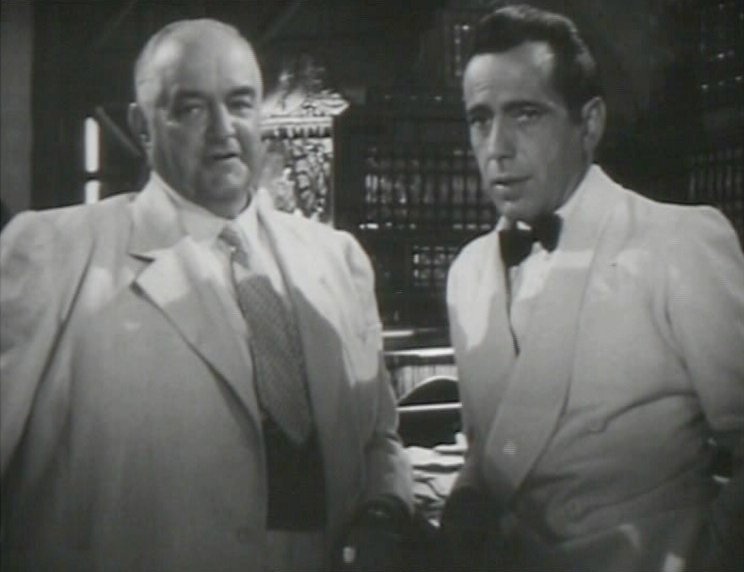
  2. As the 2008 jerseys were the first design we made, there were certain strategic mistakes incorporated which are closely interlinked with the problems outlined above under (1). To cut a long story short, I was many times mistaken for Sydney Greenstreet and Tom was asked to sign autographs with "Akebono". Even Ludwig would have looked like previous German Kanzler Helmut Kohl. So I got some strategic hints from F2P this time how to do a design that makes as look, smarter, faster and slimmer.

  3. Finally we had no matching bib shorts for our fantastic team jerseys. In 2008 I rode a lot of times with the Positivo Jersey and the NFCC bib shorts - the best shorts I ever had and coincidentally manufactured by F2P. So I thought it would be nice to have some comfortable, good looking bib shorts as well.

  4. And we didn't had a long sleeve jersey as well, which meant that we could not sport the Positivo Espresso logo during the cold season. Yes, we could also use wind stopper jackets, rain vests, team socks and condoms imprinted with our logos but at some point one has to draw a line and say: Goodbye, and thanks for all the fish.
So, I had some discussion about possible designs, minimum lot sizes and options and I came up with the following ideas for 2009:

2009 POSITIVO ESPRESSO SHORT SLEEVE TEAM JERSEY

Well I didn't want to change the overall theme so drastically so I stayed with the same colors as last year as a principle theme: orange, light and dark gray. I also left the "flag bands" at the sleeves as they are very good looking and can be used handily to explain the international background of the team. I added the Haiku from Beat Takeshi on the back side, please check here for the explanation.

In order to make as look faster, smarter and slimmer I put the flamboyant orange of the front and back and the grey on the side panels and shoulders.

The joke on the side panels about dogs, pedestrians, cars and bikes was nice for 2008 but should not be extended in to this year.

And we can also easily make a long sleeve jersey out of this as well.

2009 POSITIVO ESPRESSO TEAM BIB SHORTS

A continuation of the same theme as on the short sleeve jerseys to have a unified outlook. Please note that the so called base panels are all uniform dark grey (so called "carbon grey"), they come only in eight base colors and cannot be imprinted with logos or patterns. At least not at a reasonable cost and also not without loosing durability.

The design emphasis our mights legs and people we will pass along the road will be terrified in awe and respect. Please also note that the long awaited "Traffic light bug" sticker is now integrated on the back side for everyone to see. From behind, of course. These are extremely comfortable bib shorts - I wrote that already I know, but I would like to emphasize this again.

I still need to work on the long sleeve jersey design which I will do within the next days.

Please let me have your honest feedback, we can still work very much on the design. We need to place an order of 20 items of each of the basic types (so either SS jersey, LS jersey or bib shorts) and then we can have a minimum lot size of 5 or 10 or the other two basic types. Obviously, the more we take, the cheaper it will get. So please let me also know which types would be of interest to you.

To give you an idea of the cost involved :

- Short Sleeve Jersey app. 8.000 Yen
- Long Sleeve Jersey app. 9.500 Yen
- Bib Shorts app. 8.500 Yen

The last time I have paid upfront the complete order of 20 jerseys, however this time I would expect some help in this regard from the Positivo Espresso Hard Core Team members.

It would be nice to have the jerseys ready for the Fuji Hill Climb event at the start of June. Or Itoigawa? Hurry up guys.

11 January 2009

SUPER MAMA CHARI GRAND PRIX


Thousands of shopping bikes lined up on a huge street. A common sight in Japan at any given train station. However, I was not standing in front of a station but at the start of the Fuji Speedway Race Track where also Formula One races are held. On Sunday, the Shopping Bike Grand Prix Race was held there.

An interesting concept, bicycle races hold on the fastest circuit for the highest performing cars, with the lowest cost riding option available, a typical Japanese shopping bike or Mama-chari, which can be bought for approximately 10.000 - 20.000 JPY. The shopping bike is somehow the more expensive version of an umbrella in Japan. One tends to forget in front of a station but is perhaps not so much irritated about it and buys a new one immediately. It cost less than two Continental tires for my road racing bike.

So my team "INGENIUM", entry number 746, has bought a brand new mama chari for the race. We never did this with Positivo before. For the technical-minded pro riders, here are the specifications :
  • A must have is the shopping basket mounted over the front wheel. You need this for the optimal aerodynamic positioning.

  • Ours had a three gear Shimano Nexus shifter. Others had none. It works differently than the shifters on road bikes. You need to turn the handle shifter at least 5 seconds before you actually want to shift and then pedal like hell. If you are lucky the shifter actually shifts when you need it. If you are not lucky, it doesn't. Or does too late.

  • Most shopping bikes have a backwards curved handle. In combination with the low seat position this reminds you not to do anything imprudent. Ours luckily had a straight handle.

  • The tire size is limited to 26 inch.

  • The saddle post height can be adjusted from BOP to BAOP ("Bottoms on the pedals" to "Bottoms almost on the paddle.

  • All bike have compact cranks (inner only).
Sadly enough, I saw some bikes which had a 6 gears rear derailleur mounted and I can see the same tendency as in road biking: Upgrading the equipment as one is too lazy or simply cannot upgrade the performance of his own body. And that attendants are willing to spend a lot of money on high-grade shopping bikes. I am afraid that it will be only a matter of time when we will see aerodynamic optimized carbon shopping baskets, titan-made bicycle stands and Speedplay cleats for high heel shoes.

I left the house early in the morning, at 4:30 hr to be precise, with our car. Otherwise my team members would have picked me up at 2:30 hr. "We need to avoid traffic congestion", was the logical argument. It took me about 90 minutes to arrive at Fuji Speedway, and the race started at 8:40 hr. So I guess my teammates had ample time between 4 and 8.30 hr to prepare themselves for the race. Japanese group organization - still not use how to cope with that after all these years here.

Not that preparation is a bad thing. But it definitely is not much fun if it is pitch dark, the landscape is covered in snow and it is freezing cold. Plus there is nothing to do but to wait for the start of the race.

I arrived at the parking lot of the Fuji Speedway and I thought that mistakenly I have driven my daughter to her figure skate training and parked in the middle of the ice rink. Because of the rain the night before, the road was frozen with water and it was almost impossible to walk. I could not even take my MTB up to the start: impossible to ride on it, impossible to go with it.

Everybody was already there and the atmosphere was about the same as the temperature. I thought that we had already a huge amount of grilling and other equipment at our ground, but I saw some more things at our teams which I have not seen so far at other bicycle races: For example a huge stone bowl for making  sticky rice cakes (Omochi) on a massive wooden stand, at least 50 kg of weight. This was not part of a food stall, but belonged to a racing team.

Also I saw some items which one usually sees at bicycle races: for example rollers where riders on shopping bikes got warmed up. As I have never ever been on a roller, I asked if I could have a try and, yes, I could and so I had my first roller experience on a mama chari.

Actually the whole atmosphere is more like a Japanese Matsuri (festival), than a race.
Then the race started with Yatsuo being our first rider. He is addicted to MTB downhills so he has some cycling experience. We get the saddle out to the maximum and off he is for the start. The other attendants there can be classified in the following groups:
  • Normal people, as seen on shopping bikes on the streets of Japan - 90%
  • People dressed up as Darth Wader, Baikinman, Maids are other stupid characters - 5%
  • People dressed up as cuddly toys - 3% [Toms nightmare]
  • Professional road racers - 2%
My favourite group was one team where every member was disguised as egg plant and had Japanese flags attached to their bag with slogans written on them. I called then "The right wing eggplant field" or 右翼なす畑. My favourite bike was the one which had mounted a small wooden Japanese house on the back with a board written "Grilled Potatoes" (焼き芋).

Yatsu gives everything, makes two laps and is back after 25 minutes.
Some of the pro teams are fast, after the first lap the first rider crosses the line in under 9 minutes.

Then it is my turn. At least it is sunny now and the roads are not frozen any more. The way out of the pit is a disaster. As most people have no racing experience, they ride their bikes just like in normal traffic : Moving suddenly to the left or right, cutting corners, not looking behind - this is dangerous stuff here .... this is even more dangerous than a JCRC F class race. This is like P or Q class at best.

The first part of Fuji Speedway is rather nice, a fast downhill, some easy curves. I have never ridden on that bike before, but it feels OK, I try my best, at least aerodynamically. The second part is climbing. Much to my surprise I have to shift down into second gear for the climb. And then even in the first gear. No way to pedal hard, when one cannot extend ones legs. I almost came to a still stand.

I jump out of the saddle, but somehow the position is awkward, the handle height is OK if you sit on the low saddle, but with my height, when I jump up, my arms are too short, so I need to lean forward and my chin almost scraps over the front wheel. It feels like pedaling in one of these swanboats.

But I am still much better doing than a lot of other riders. I would guess that almost two thirds of all riders are walking up the slope. I come to the straight finish and accelerate as fast as I can, then put my hands at the basket and lean my body into the airstream.

One more lap like that and I am back in the pit after 21 minutes. So it took me 10.30 min for one lap in average. My best time at the endurance race with Alain last year here was 7:10 min.

We had four fast laps and we are in 23rd position - out of 962 teams. Not bad.

Then, unfortunately, the other eight members or our team are doing their laps. They share Winston Churchhill's approach to sports and their performance is exactly like that. Our ranking goes down to above 100, then Yatsuo and me do are four laps, we go up and the down again. This continues until the end of the race, where we finish between 90th and 100th most likely.

Nevertheless I had a good time. Some days later back on the road bike I wonder why I am so high above the road and I am almost afraid to fall down - this is how a day on a mama chari can alter your point of view.

I am pretty sure that with a good bike (6 gears rear derailleur plus long saddlepost) and a strong team of riders from Positivo Espresso and/or TCC we could make a top finish a any Mama Chari race. But we need to act fast, before others find out.

[photos to follow - perhaps]