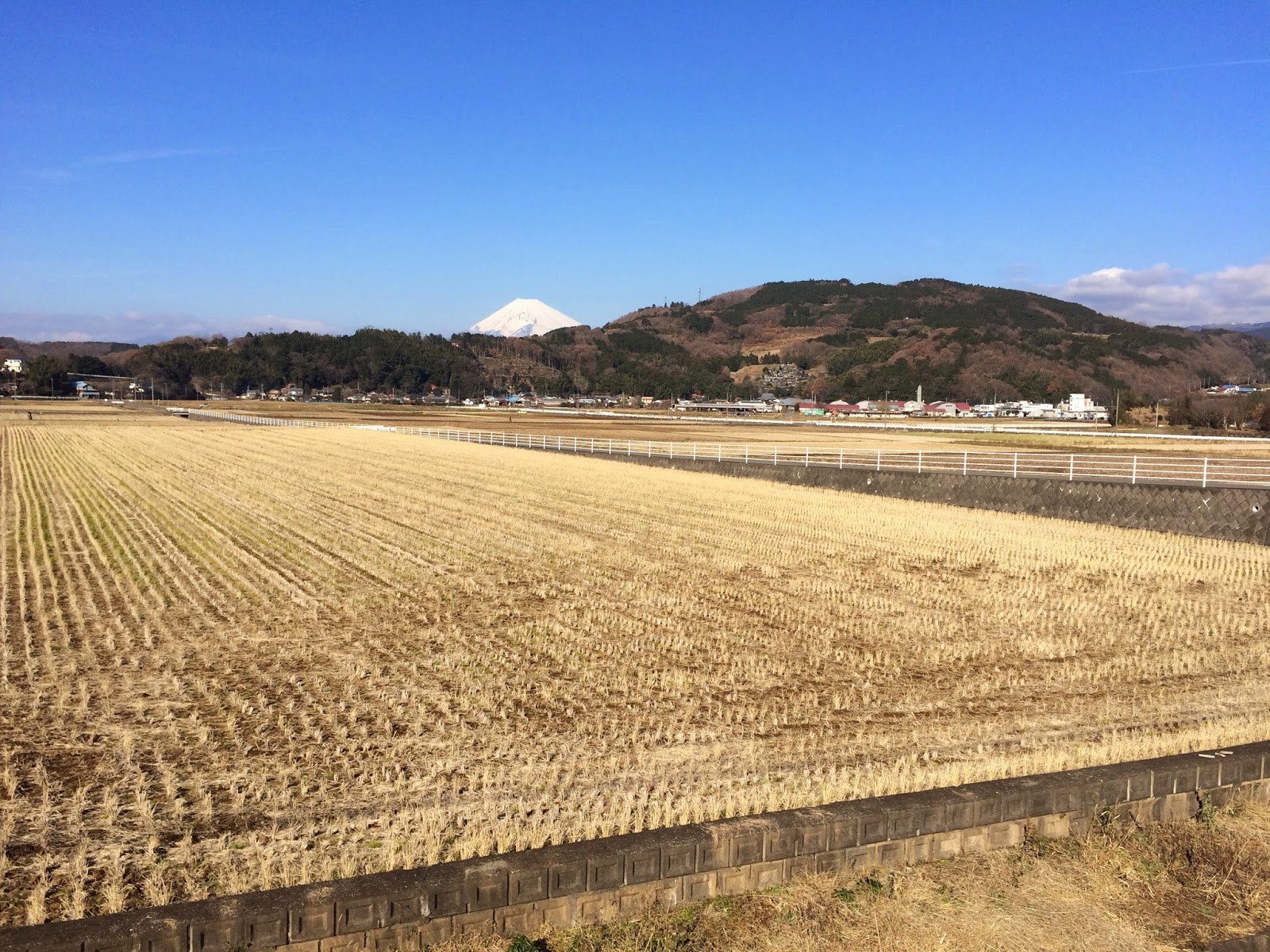
11 January 2015

Francois Pervis in the Keirin culture

For our French speaking members and friends, this documentary about the adventures of track World Champion Francois Pervis of France in Japan, notably his life in the "Keirin culture" of Japan.  A good view behind the scenes that will be appreciated by anyone who has raced at CSC Shuzenji or done laps at the "Kawasaki Bank" track on a Sunday afternoon.

Hat tip to MOB at Cyclitis, who found it. 

Hiroshi is frequently mentioning overseas demand for anything "Keirin" and the niche-strength of the "NJS" certification.  Maybe this kind of documentary is how the image is made?

The Japanese Keirin world has traditionally been very closed to foreigners.  I have never had much interest -- basically cyclists as the object of gambling, a substitute for horse and horse track betting. ... with all the opportunities for "fixing" the result that exist in other gambling, and more so.  But based on this video, there seems to be some interest in reform, as Japanese keirin riders, who once were competitive at international track racing, no longer make it onto the podium.  And of course, there is 2020 and the Tokyo Olympics, which gives 5+ years in which to make reforms and have something to show for it!

Miura 200km Brevet with fast bike and Gokiso wheels

I joined a Nishi Tokyo brevet today.  I want to get my 200, 300, 400 and 600km series done as soon as practical this year, since it is a prerequisite for PBP in August, and this was the first Tokyo area 200km in 2015 that I could register for that fit my schedule.  So I joined it even though the course, around the Miura Peninsula, would mean lots of traffic signals and plenty of traffic getting to Yokosuka and getting back from the coast and through town.

Mt. Fuji across the Sagami Bay from Miura, South of Hayama.
The start/goal is at the Konno Seisakusho/Cherubim shop in Machida.  For an early morning start (6AM today), train is not possible, and there is no free car park.  So in addition to the Brevet itself, I get to ride 50-55 kms round trip just getting to and from the event.  A 200 km brevet becomes 255-260km.  300km becomes 355km.  The Strava or ridewithGPS data is at the hyperlinks, and a map is below.

Today was a spectacular winter day. During the day it was warm, sunny and not very windy.  Wind surfers and sail boats were out.  Surfers as well ... in January!  Much nicer than December this year. But it was very cold in the morning at Machida (somewhere around -4 or -5 degrees C).

I made it to registration at Konno Seisakusho around 5:45AM, then on to the park a few blocks away for "bike inspection" and the start.  Of course, the 5:30AM "briefing" was long finished, and riders already were heading out onto the course, even as I went through registration. I saw my Kaminoge neighbor Kaz Tachikawa -- back on the bike after a 2013 injury that kept him out of London-Edinburgh-London and subsequent events -- and Joe Wein.

The rush to get to the start and then back onto the road had one benefit -- I was warmed up.  And I was on my fast bike -- the Canyon Shark with my Gokiso 38mm rimmed carbon clincher wheels, with the smoothest rolling hubs ... in the world, perhaps?  As a result, I ended up the 2nd finisher out of approximately 70 riders, even with a lunch stop and basically rolling home the last 75 kms of what one of the staffers correctly called a "beginners' course".

Less than one km from the start, on a downhill stretch, I zoomed past a group of 10-20 riders.  Then more.  Within 10 minutes I had moved from being one of the last starters (out of around 70), to being in the middle of the group.  After riding past more and more, I got stuck on the back of another 10 rider group, but there was too much traffic to pass.  So I bided my time until we turned North onto Tokyo Route 18.  Then, as the route bobbed up and down toward Onekansendoro then more hills, I passed everyone else within sight.  Hi Joe, and bye.  Bye Kaz.  As it turned out, by the time we got out along the Tamagawa and were headed down river, I had passed everyone except two riders at the front who I met at the first checkpoint.

Other than the nice weather, what was good about this event?

--The route through Yokohama was nicer than others I have taken, looping east of Yokohama Station and through Minato Mirai, then along the Yamashita Koen waterfront -- broad streets and very little traffic early on a weekend morning, with plenty of nice views.
Minato Mirai on a sunny Saturday morning
--South of central Yokohama, the route took the same Sangyo Doro as I rode with Eric and Seiichi last month ... but rejoined Route 16 much too soon, with its heavy traffic.  But once past Yokosuka, in southern Miura, we hugged the coast almost the entire way, which was beautiful.  And we rode through Misakiguchi and then on local roads, rejoining the main road (Route 27) only 6-7 kms later.
Along the coast!
Fast Gokiso wheels!
--"Magurodon" seafood lunch at Misakiguchi.
Organizers at the checkpoint in MIsakiguchi -- just across from 3 seafood restaurants.
--And after the milling crowds of Kamakura and Enoshima, and the broad coast road west to Chigasaki and beyond, the route North (from Samukawa through Ebina and then up to Sagamihara, took some very local, back roads.  The road surfaces were not great, but it was the lowest traffic, most interesting route I have taken through this area of sprawl.

The only negative was the trip down the Tamagawa, on the Kawasaki side road, together with plenty of trucks and impatient factory workers commuting in their big vans.

On the way back into town, I met Hara-san and [On]-san of Nihombashi Audax, doing a "test ride" for one of their upcoming events.  I rode with them all the way to the Tamagawa, chatting at each of the (many) traffic lights.  My next scheduled Brevet ... their 300km ride on February 21.  Looking forward to it.  楽しみにしています。

---------------------

Joe Wein's trip report is here.  His photos from the event are here -- more extensive than mine and some very nice ones.  Actual photos of other riders.

04 January 2015

Broken Things

Happy New Year
This is the second crank that broke on me - first was a Shimano Dura-ace hollow tech. This is from the commuter fixie. Replacement cost is going to push up my estimate of the price of the daily commute - currently 10 pence!


Christmas present to myself

I am getting tired of doing bike maintenance and building (if I were better at it I guess I would call it "wrenching") in the cold/hot garage in winter/summer without a good stand.  This TACX foldable stand is a huge improvement.

Now I just need to get an easily rollable mat to cover the rug so I do not get (more) grease and grime on it, before I am thrown back out into the garage.
Workstand - not telescope or anti-aircraft

01 January 2015

A Guide for Audax Staff in Japan - How to Distinguish between David and Jerome

The last Brevets of 2014 are long over, and the new year’s campaign will start in a few days.
If Jerome and I ride an Audax event together, then the staff can see us coming and just remember “David and Jerome” or, more likely, “Jerome and David”.   There is usually no need to distinguish between us.
But when only one of us rides an event, it helps to remember which one of us is David and which is Jerome.  This can be difficult for the typical Audax staffer – two foreigners, both from Setagaya area, both riding Audax events, both overweight (by Japan standards, at the least).  Goodness knows, it is difficult for me to remember Japanese Audax riders’ names, without meishi, seeing people only in “disguise” with helmets, sunglasses, etc., and as communications between riders are usually via Twitter, where people never use their actual names, but indecipherable “handles”.  It is harder even given the numbers of Japanese riders.
David - 7 Up Jersey, Giant TCR frame.  Jerome -- short shorts, Look 585 frame.  Circa 2008 
On R-Tokyo’s Ise 1000 Brevet in September, as I pulled into the checkpoint Southeast of Okazaki City in Aichi Prefecture, a familiar Saitama Audax-based volunteer whom I have met at numerous previous events waved a friendly greeting.  She next yelled out “Jerome-san!  Jerome-san!”  Then as I pulled in closer, she realized her mistake, and turned her back to me, literally, to hide her embarrassment.  I tried my best to pretend that everything was normal.
A few weeks later, as I rolled up a bit behind schedule to the start of the Nishi Tokyo 200 brevet, a Kanagawa Audax volunteer I have met several times – and last spoke with at the end of the Fleche in Kamakura in April – was working at the sign-in table.  She greeted me as “Jerome-san, Jerome-san” and started to look for Jerome’s sign-in.  I was in a cranky mood, having awoken earlier than I would like and hauled ass to get to the start in Machida, so all I could counter was a dead pan 「私はジェロームじゃない。デイビッドです。」(“I am NOT Jerome; I am David”.)  Again, it was an awkward moment.
So Audax staffers, here are some pointers.

Similarities

David and Jerome have both been known to elevate bicycles over head in a victory celebration, say at the top of Wada Pass, or Odarumi Pass.
David -- Cervelo frame, Assos Kazakh jersey; Jerome -- Look frame, short shorts and Credit Agricole sleeveless jersey
We both do some crazy rides, heading up Yanagisawa Pass or over Norikura in early winter. … or the mountain route through Yamanashi and Nagano at year end.
David -- Assos winter jacket; Jerome -- Look winter jacket
Jerome on Norikura in November.  Look jacket. Beeren bib shorts (with straps down?)


Jerome near Shibu Toge 2014
David at Shibu Toge 2014
We each have been known to sleep in public, on concrete or benches, during longer events.


We each will strike an occasional goofy pose -- signs of (too) long residence in Japan.

And yes, perhaps because we are both just a little bit above our ideal riding weight, we are both very strong riders in cold or wet weather!

Differences.  But there are some key differences, that will help a discerning staff member to distinguish between us.

Home Country

1.  Jerome – French, from the SW suburbs of Paris (15-20 minutes' by bicycle from the start of PBP).  France is the land of cheese and wine, Bernard Hinault, Laurent Fignon (departed) and of course the Audax Club Parisien.

2.  David – American, from Portland, Oregon, the home of Chris King, Vanilla Cycles and numerous independent framebuilders.  America is a nation of immigrants, the land of apple pie, baseball and Chevrolet; home of Lance Armstrong (cheater) and Greg Lemond (champion); and RAAM, usually won by an insane European.

So if you are not sure which one of us it is, just ask "what is your home country"?  If France - Jerome.  If America -- David.  Better yet, just ask "comment allez vous?", and if you get a reply pouring forth in French, it must be Jerome.

Dress

This is the easiest method for quick identification.  Jerome often wears “short shorts”.   David wears traditional bib shorts, typically Q36.5 or Assos brand. Here is an example:
Another view of Jerome's distinctive dress.

Likewise, David wears jerseys with regular length sleeves, even in the hottest of conditions.  Jerome, on the other hand, can sometimes be seen in sleeveless jerseys.
Indeed, Jerome can often be seen bare-chested, or in mesh top, in a restaurant as he dries his jersey on a chair.  Jerome wears a distinctive mesh top inner layer (referred to by him as the "Finnish Condom").  David typically keeps his clothing on while in restaurants. He does not have a"Finnish Condom" inner layer.

Indeed, this basic difference in dress can be the easiest way to tell them apart, since it persists even in winter in many cases, as in this early December photo from the top of Yanagisawa Pass in a recent year:
And even in the rare cases when Jerome is fully clothed, he favors a yellow "Beeren" jersey from his former Kobe/Sanda based club.
Egg


Around Water
Jerome – Can be seen nearly naked emerging from the waves, in the style of Ursula Andress or Halle Berry emerging in a James Bond film.  Jerome will typically jump in the first body of water -- river, lake or ocean -- on a hot day.  David MAY jump in an occasional swimming hole, but is likely to keep his (cycling) clothes on when doing so.
Jerome emerges from the Sea of Japan - Tour de Noto
Halle Berry
Ursula Andress

Thank you for your time, and goodbye until we meet on the road! 
Front view -- David on left, Jerome on right
Rear view -- Jerome on left, David on right.

29 December 2014

Last Big Ride of the Year

As in 2010, 2011 and other past years, Jerome was planning a bicycle ride to Kansai at year end to join his friends from Team Beeren and witness the January 1st sunrise from the top of Mt. Rokko.  He was going early (Dec 28th instead of 30th) to spend 2 days in Nagoya with friends.  I told him I would be happy to ride the first leg from Tokyo with him, as long as I could be back home in time for a long-planned family dinner.  In the end, I rode 185 kms to Shizuoka-shi, then another 15 kms home from the Shin Yokohama train station.
Our Route.  We parted at around the 175 km mark, Jerome continuing along the coast.
Ti Travel Bike and Bette Noire rest in the sun along the Suruga Bay west of Numazu
As usual, Jerome wanted to take an interior route.  Last week, he suggested an early (2AM?) start, going over Yanagisawa Pass and descending to Kofu in late morning, then getting over Fujimi Pass and into Nagano/Chino before dark.  He had said he did not want to take Kiso Valley, so I suggested maybe he could go via Iida instead -- from Okaya or even via Tsuetsuki Pass.  After our ride on the 26th over Yabitsu, at the height of early afternoon temperatures, revealed black ice and quite extreme cold at 500 meters elevation, he dropped the idea of 1475 meter high Yanagisawa as unrealistic. Likewise, slightly lower Tsuetsuki seemed more appropriate for skiing than cycling.

I sent Jerome a note early on the 27th with a report of the forecast temperatures if we took Koshu Kaido (Route 20) in the morning.  Otsuki -6 (C) at 7AM.  Suwa in Nagano -8 (C) at 7AM, -5 C at 9AM.  I urged him to try a coastal route, despite the traffic, and in an accommodation he agreed, this year, that it would be more realistic.  They say this has been the coldest December in Japan in recent years.  No doubt there will be other, warmer years ahead when we can try the mountainous internal route at year-end.

We met at Marukobashi, a bridge over the Tamagawa, around 4:45AM, and crossed into Kawasaki, then Yokohama.  Jerome had mapped a route via Shin Yokohama, then for 12 kms on a limited access road that I had not used before.  I think I noticed a bicycle with a line crossed through it where we entered the road's elevated portion just beyond Shin Yokohama (I believe it is "Yokohama Kanjo Ni-go" -- Yokohama Main Route #2).  Anyway, at 5:30AM on a Sunday morning at year end there were generally 2 or 3 lanes heading south and barely any motorized vehicles, so no harm, no foul, and a very fast route to the intersection with Route 1 -- just a little before Route 1 merges with the end of the Yokohama Shindo at Totsuka.  Do not try it on a normal day in normal Yokohama traffic. Once we joined Route 1 we were on the Hakone Ekiden route as far as Odawara.
Early on the climb toward Atami Pass, Mikan trees and sea visible.
After a first quick 7-11 rest stop 35 kms into the ride, we pushed on to just before Odawara, where we stopped for a relaxed breakfast at a "Gusto" family restaurant.  Then on the coast road toward Atami.  Traffic had picked up and this coast road is crowded, especially on sections where there is no toll bypass.  But the sea and hills can be beautiful, and were this morning.  I had suggested to Jerome that instead of descending past Atami Station and taking Route 20 or 11 to Atami Pass, we might try the crazily steep alternative back roads to the Atami museum of art (MOA). This saves a bit in terms of elevation gain, and is a much nicer, lower traffic climb.  But it still a hellishly steep climb, and does involve stretches where walking is faster than cycling (as I proved, passing Jerome twice off the bike as he stayed on).
A flat ride, with one big exception. ...
As we turned off the coast road to start the climb, we pulled off to strip off our sub-zero layers and prepare for the heat we would generate on the climb.  A policeman walked by with his New Year pine boughs to decorate the front of his police box around the corner.  We greeted each other "Yoi Otoshi Wo Mukai Kudasai".  He came back a minute later bearing a box with lots of small chocolates -- mint, almond and white/dark mix.  We each took a mint.  He insisted we have one of each type. Japanese community policing at its best!  ... Must be nice to be in the police in a country where the citizens do not bear arms (guns).
Reward at the top of Atami Pass -- Mt Fuji comes into view.
Spokes glisten in the sunlight.  The wheels are new.
But the bike (and I) were here back in September on the R-Tokyo Ise 1000km event.
 ... in pitch dark well after midnight.
On this trip Jerome was riding his touring frame, the"bette noire" or "black beast".   He tells me that it is a very comfortable ride, but very heavy, complete with rear rack and bags, fenders, heavy tires, etc.  Not a climber's bike.  Not quite the climbing handicap of a broken rear derailleur such as Friday, but still a considerable one.  Indeed, I waited several times on the climb, and was up the pass at least 5 minutes ahead of him, riding my Ti travel bike.  The climb was painful, especially on the lower stretches which had some nasty 15-20% grades, and many sections that were more than 10%. The reward was a spectacular view of Mt. Fuji, which stayed visible to our right over the next 3~4 hours.  And then we had a great, low/no traffic descent down Route 11 to Kannami.  Then we slogged through the sprawl and traffic South and East of Numazu, before enjoying the relief of the coastal road, Route 380.
Mt. Fuji as seen from Tanna, on the western descent into Kannami.
Jerome and Mt. Fuji as we approach Numazu.
We joined Route 1 briefly to take a bridge over the Fujikawa, then again traveled on side roads I know well from brevets past.  As we passed though Shimizu, I said farewell to Jerome.  He continued along the coast line, while I took Route 1 to Shizuoka Station and the train home.

Jerome reported headwinds on the next stretch -- not unusual for winter on the Shizuoka Coast.  The wind let up before he made it to Hamamatsu.  After it began to rain, he stopped for the night at a business hotel in Toyohashi, over 300 kilometers from Tokyo, and leaving just a short ride to Nagoya for the following day.

UPDATE:  Jerome completed the ride to Nagoya, some local spins in following days, and went on to Kobe as planned on December 31.  Around 600 kms for the trip!  On the evening of December 31 it snowed in the Kansai area.

26 December 2014

Epic ... or at least Spectacular Winter Ride - Hakone/Gora, Ashigara, Yabitsu and Home

The Litt and Bouhet families stayed at an onsen hotel in Gora, Hakone, on Christmas night.  This morning, after breakfast and an asa-buro (morning bath), we each checked out of the hotel.  The Bouhets got into their car for the drive home, the Litts planned to explore Gora a bit more before returning by train ... except for Jerome and David, the fathers/husbands.  We got on our bikes and started to climb.

The plan was to ride back to Tokyo, and to find a more interesting route than just descending to Odawara and going along the coast.  Instead we took a mountainous route.

We climbed up along Route 733 to the Pola Art Museum, warming up from the climb despite sub- or near-zero (C) temperatures.  Then a quick descent to Sengokuhara and eventually onto Route 138.


On Route 138, instead of going through the long tunnel at Otome Pass and descending to Gotemba ... we turned off onto a rindo I had never taken but remembered reading about years back, carried our bikes around a locked gate, and climbed up the road around the shoulders of Kintokizan. The road, of course, was deserted and nicely paved.  Highly recommended.  We passed only a few workmen and one or two cars over the next 15 kms, first climbing several hundred meters elevation to a tunnel/pass, then descending, eventually to meet the course of the Nishi Tokyo brevet I rode in October, near Yuu-hi no Taki.
Spectacular conditions ... on the rindo climb.
Another photo of Jerome on the rindo climb
Just past the tunnel -- start of the descent
Looking toward the lower areas around Odawara
We followed the Nishi Tokyo Brevet course to Matsuda/Shin Matsuda, then joined the trucks on Route 246 for a brief stretch to Hadano, before the climb to Yabitsu.
Minami Ashigara - Home to the Kintaro folk legend?

Riding the Gokisos again today!
Great all-around performance.  A joy to ride.
Looking down at Hadano, from the Yabitsu climb
Jerome seems to have regained his cycling shape over the past week.  He did more than his share of pulls on the flats.  No he was not staying with me on the climbs, but who would, with a broken rear derailleur cable and "fixie" gearing for Yabitsu Pass!  I suggested we call off the mountain stage ... but Jerome would have none of it.

There were only very few cyclists today on Yabitsu, and none on the North side as far as Lake Miyagase (and beyond)!  We passed no cars on the Yabitsu descent until the car camp areas near the bottom.

Perhaps it was the black ice that kept people away?  We descended the North side between 2 and 3PM, but could already see the ice starting to form on damp areas of the upper part of the road.  A bit later and it would have been extremely treacherous.  Down below in forested areas there were a few ice patches, as there had been on Kintokizan in the morning. I was glad that, after around 500 kms with the incredibly light-weight low rolling resistance Conti Supersonics, I had switched to the grippier Vittoria Open Pave 25mm tires for this ride.  I rolled right over a few icy patches without incident, noticing far too late to stop, but careful not to turn or push at all. Jerome later reported that he had slipped and tumbled once, at slow speed, on the Yabitsu climb.
Deserted parking and turn around at Yabitsu Pass, in the shadows already before 230PM!


The Miyagase Michi No Eki -- only one shop open, and done for the day serving anything hot.  We did get some mikan.
I asked Jerome which way he wanted to get home from Miyagase.  "The fast way," he responded.  In any event, we took a straightforward route past Tsukui-ko, and then eventually took Yaen Kaido back to the Tamagawa.  We were home in good time, a bit after 530PM, having traveled 140 kms.

Was the trip really 3311 meters of climbing, as Strava reports?  No.  I would be surprised if we climbed as much as 2000 meters.  300, 300, 700, and lots of little bumps along the way.


Does this qualify as an epic ride?  A close call.  But it felt epic, leaving our families at the start, heading into the cold weather that kept nearly all other cyclists off the roads, the spectacular rindo stretch and deserted North side of Yabitsu, all the normal services shut down, and Jerome doing most of the ride without a functioning rear derailleur!