05 January 2019

First Brevet of 2019

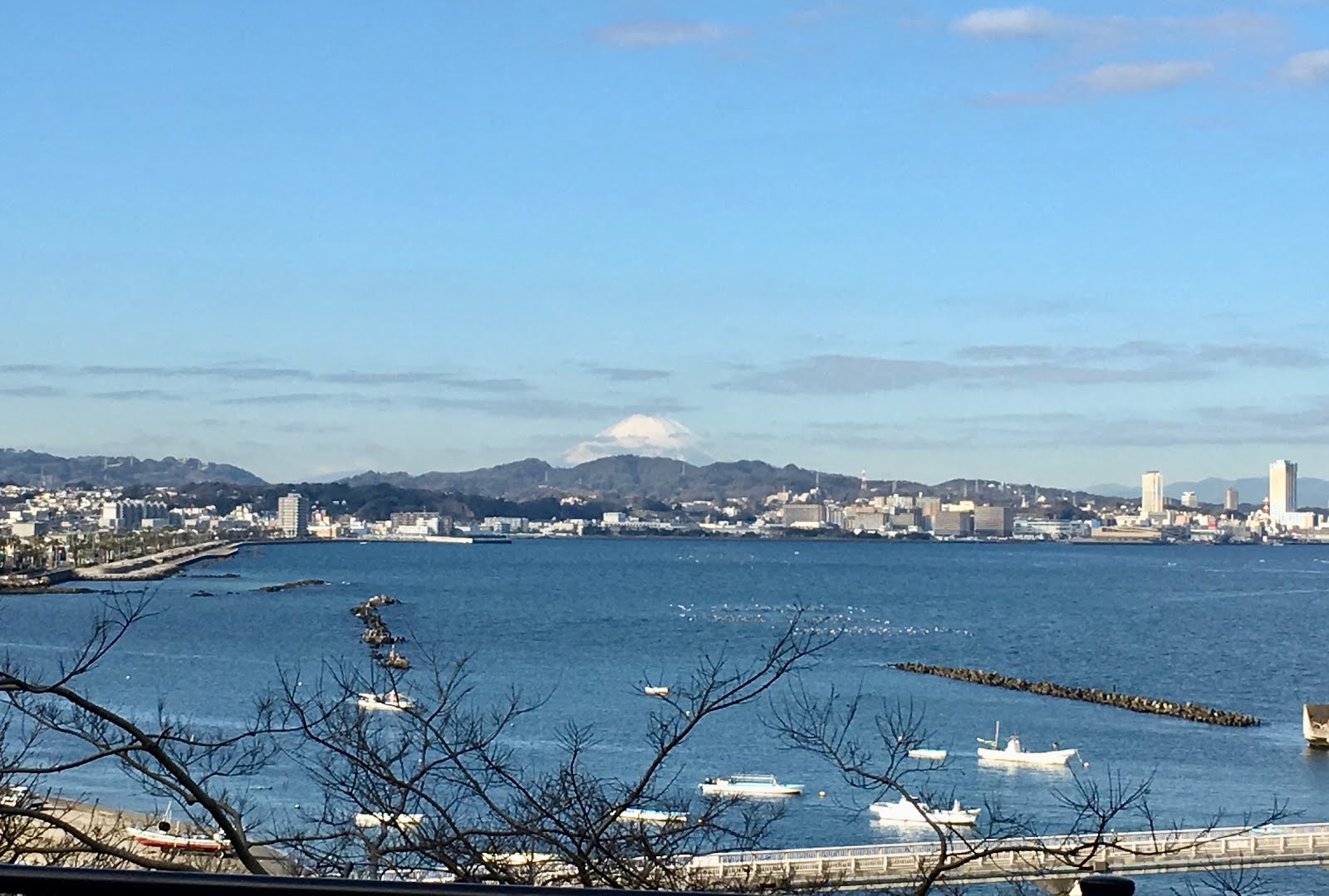
The Oregon Randonneur at Tateishi on the Miura Peninsula, looking toward Mt Fuji

Japan Audax local affiliates offer many 200km brevets in early January. They usually fill up, and this year (a PBP year) especially so, as everyone wants to get in a ride while off from work.

Last year, 2018, Jerome and I rode our first brevet on January 7 in Shizuoka, 200kms from Numazu to Fujieda and back, with a detour up Nihondaira. It was a very nice day and, despite some heavy traffic at places, a nice course.

In 2017 I did an AJ Tamagawa brevet from midnight on New Year's Eve, watched the first sunrise of the year along a beach on the Miura Peninsula, with a few other riders and thousands of visitors to the area. I was done and home before Noon on January 1.

This year, AJ Tamagawa, among others, is offering a "brevet week" of events -- it is possible to ride 200, 300, 400 and 600km events, complete the "SR" (super randonneur) series, and qualify to ride Paris-Brest-Paris, all during the first week of the year! Taiwan's audax group has a similar series, and one Japanese randonneur I know had already completed the SR series before I started my ride on Friday. Another, Ijichi-san, staff of AJ Tamagawa who is one of the core Audax riders (he rode Susan Otcenas' Seattle Intl Randonneurs' Cascade 1200 last year, as well as Maya Ide's Tohoku series over Golden Week), told me that he would do the full series this week -- but he already did the 200km on the pre-ride check (which counts under Audax rules).

But this idea of an SR series in the northern hemisphere in winter is, well, crazy. It is going overboard. It MAY work well this year, when the weather is good, but it is hard to plan a good 400km or 600km ride that will work in mid-winter, even in typically dry Kanto. Indeed, the AJ Tamagawa 600km will have probably 300 or even more (500?) traffic signals. So many stops. So much traffic ... to keep on a route near Tokyo and out of the mountains. One long boring slog. Worse, if the weather is cold. No, the first week of January is for riding during the day. A 200km is the perfect challenge.
The moon, Venus, riders, high rises, trees, and train station, all before first light.
The same view a few minutes later. Wave of riders at the ready!
Jerome missed the signup, and was unsuccessful in asking AJ Tamagawa to accept a last minute (late) entry. I think they just have too much on their plate to accommodate such requests while running a brevet week. So he rode out over Yabitsu Pass, and did meet us at the Oiso control. Mindful of the Audax rule that non-participants cannot provide any assistance to riders outside of controls, we rode the same course, but never close enough to draft. I gave him some directions ... but not vice versa. Still, with about 50 stops for traffic signals, and another control, we could chat enough.

Which bike to ride? I wanted to ride the Parlee ... but broke a cable and did not have time to replace it. The Ti Travel bike, Voyage Voyage, is disassembled for installation of a new group set. So I was happy to ride the Oregon Randonneur. I had not used it in months, so needed to lube the chain, pump the tires, and rode it the evening before to a fondue feast at Jerome's. It felt a bit sluggish. And on the ride out to dinner the rear fender was rubbing, and I got a flat tire on the way back home.

I switched out the wheels and tightened the rear fender ... and it was as good as new. Still I am not a fan of the Ultegra 6700 shifting -- far more sluggish than 6800 (or 6600, in my opinion). It turns out that the DT-Hugi hub on the rear wheel ... needs maintenance. The freehub was barely turning, as if the grease inside has gotten clogged with other material. So I I switched to other wheels. I was glad to have others to use for this ride -- the bike was a joy once I got it ready to go. (If anyone needs a spare wheel in a pinch ... I have them!).
Mt Fuji while crossing the Tamagawa on Route 1 (from the side walkway)
Anyway, I made it to the 6AM start with almost 15 minutes to spare ... only to be told that I was in the 630AM "wave". This was a bit disappointing since I knew that the traffic through yokohama would not get better as time passed, to say the least.

The course was kind of like a combination of my recent Miura ride (to the tip of Miura Peninsula), and my recent Shonan coast ride (the segment from Enoshima to Oiso where we had lunch). But this time I would take Route 1 through Yokohama and then Route 16 all the way to Yokosuka. I prefer my route from Christmas Eve, which skirts the harbor edge of Yokohama, goes through Minato Mirai and to Hakkeijima via the Sangyo-Doro. And I would prefer to avoid the coast road between Kamakura and Enoshima, where it is basically a parking lot. It is not fun to ride through a parking lot, even when the view is glorious and drivers don't pull over to the left and block your way.
On the parking lot/road between Kamakura and Enoshima.
I did not take many photos. Only one stop on the way between Yokosuka and Misaki-ko, none between Enoshima and Oiso -- both where I was taking photos last week with a far more dramatic sky.  These are from elsewhere -- Hayama area mostly.
Mt Fuji from south of Yokosuka
The Oregon Randonneur takes a different riding style than a modern carbon or titanium racing bike. It requires a kind of spinning style. It is a bit heavier, and the narrower steel tubing will flex a bit and absorb stomping. But it responds very well with a slightly lighter touch and a faster peddling cadence. And once it gets going ... it keeps going, fast.  The randonneur-style bars have comfortable, large/wide "drops". Then again, to move fast up the hills on this bike, I must get out of the saddle. It is almost like running up a hill on the peddles. Once I adjusted to this style of riding ... which took the first several hours ... the bike was fast and comfortable, and I could finish in a reasonable time, given the stop-and-go nature of this course and the relatively heavy traffic.
More from Tateishi


Sunset at Marukobashi ... almost done!
Even as I grumble about the traffic on this course, it was a great way to start my cycling year. I just need to keep it up to be ready for Tasmania next month and France in August.

Strava for the entire day is here.

03 January 2019

Wintertime = Powercranks Time

If I am going to enjoy my somewhat more ambitious cycling calendar this year, I have got to get a really, really strong base. So for the first time in several years ... the Powercranks are going on a bike, and I am setting up the stationary trainer. Maybe I can ride outside this week ... but I know in the next few months there will be lots of days when I cannot or do not want to be riding outside.

Ever ride with an independent cam left and right crank? Powercranks is like doing one-leg exercises with BOTH legs, and with a brick tied to each foot. But one does get used to them. Heck, back in 2011, I even rode around Mt. Fuji on Powercranks once (from/to Kawaguchi-ko).And it is a lot of fun doing "dolphin kick" rotations as one climbs past other riders. And riding them on the streets one always gets a double take from road cyclists.

If you cannot read the logo, it says "for a good time, call POWERCRANKS"

Bookends

Always the Tamagawa
The 2018 cycling year began with a Shizuoka 200km brevet that Jerome and I did out of Numazu, to Fujieda and back (with a detour up Nihondaira ... the isolated hill north of the "Strawberry Line" along the Shizuoka coast.
Mt Fuji, sponsored by Tokyu Railways, Tokyo Corporation, Tokyu Real Estate, and Rakuten
So it was only fitting that the year finished with a ride with Jerome on the last day of the year, though a much shorter spin out Onekansen Doro, along the "tank road", and back in Yaen Kaedo. Our rendezvous was along Meguro dori at Yakumo 3-chome crossing.

For once, I arrived before Jerome, and was amused to notice that the Denny's now (sometime in the past few years) has had an upscale makeover, with a "Yakumo Prestige" name attached to it. What does this mean ... other than fancy lettering and perhaps a few hundred yen extra tacked onto various menu items? Well, I guess it must be a Denny's upscale brand for fancy Tokyo neighborhoods? Having been to Denny's in Santa Cruz at 5AM last summer before 3CR, and being the only non-homeless person in the place, and also having experienced some pretty awful food AND service at a Denny's in Paso Robles, California when it was one of the only choices in town at 11PM during 3CR ... I guess anything they can do to rebrand can only help.


And the first real ride of the New Year was another spin on January 2 with Jerome over Hospital Hill ("Byoinzaka"). ... then as we turned to start the climb of nearby I-Ro-Ha Zaka, I broke a shifter cable on the Sky Blue Parlee (3 years and 9 months since I installed these cables ... and they DO break eventually with Shimano or SRAM brifters). So the first ride of the year was only just over 60kms. That cut at least 40-50 kms off the planned trip, but still felt like enough as we returned, me riding in 36-11 gearing on the path along the Tamagawa, in fading daylight.


Of course, Jerome, who is traveling most of the time for work these days, is on a crash program to get back in shape for PBP, also rode 175 kms on January 1 (over Kazahari Pass no less). He plans to ride again today (Jan 3).

I will try to focus on other things today -- bike maintenance, for one -- since I am slated for a 200km brevet on January 4, the first 100km+ ride of the year.
Happy New Year to all!

28 December 2018

Shonan Coast Beauty


Today I did my 4th ride of the "Festive 500". Ride 500kms from Dec 24 to Dec 31. As of evening of Dec 28, I am at 419 kms. So should be easy peasy from here ... as long as I can avoid injury of last minute mechanical failure.

Nils, Andrew and I planned to meet at Minami Machida station on the Denentoshi Line at 8AM. I left home around 640-645am and made very good time, arriving around 8:05. They took the train from Futako Tamagawa and arrived a few minutes later. Andrew had picked Minami Machida because it is very close to the Sakaigawa, a river that has a bike path along it 95% of the way to Enoshima. This is as good a way as any to get to Shonan Coast - train to Minami Machida (to avoid racing trucks on Route 246 as I did early this morning), then down the riverside.


After a few kms we joined the route that I once rode on my commute to teach a weekly class at Keio SFC campus. I was leading the way this morning, knowing each corner, where there was traffic or not, where a rider needed to slow or even unclip from one cleat to get through a barrier, having ridden this probably 50 times over a 3-year period. 

The first stretch was nice and semi-rural, lots of fields. Then there was a more suburban section. Then there was a section of depressing public housing. And more variety, then we were in the town of Fujisawa, across Route 1, in an urban area, and finally to the water! Wow! It was glorious today.

We snapped plenty of photos, then headed west, trying to ride the sandy-but-paved path along the beach as much as possible, instead of the faster, but less scenic, road. I have never seen the Shonan coast as beautiful as it was today. Dramatic clouds and sun, waves, surfers, Mt Fuji partially visible in the distance. What a scene!


Anyway, we stopped for lunch about 14 kms before Odawara Castle at one of Andrew's regular haunts for a delicious, reasonably priced lunch, then continued on to Odawara and toured the castle grounds by bicycle (no other cyclists riding around ... but no one stopped us).


Andrew and Nils continued on toward Atami. I rode up to Hakone Yumoto and checked out the beginning of the Kyu-Tokaido, just to think about using it on upcoming rides out of Odawara this Winter/early Spring, when weather permits. Then it was back to Odawara 103kms total, and a quick (27? minute) 3000 yen shinkansen trip back to Shinagawa. Almost too easy, too glorious.

GPS track is here.

Map below.

27 December 2018

Exploring NW Izu -- 2018 December version!

Mt Fuji from Numazu, near the mount of the Kanogawa (Kano River)
I love cycling Nishi Izu. The road along the coast ... all the way from Numazu to Minami Izu and Shimoda ... belongs in any proper collection of "best rides" in the entire world for road cyclists.
Mt Fuji from above Osezaki
Please, friends from outside Japan, come and ride it, and tell me if you disagree:  Low traffic, spectacular views of Mt. Fuji and appropriately dramatic coastline, mikan (citrus) orchards, small, quaint towns with fishing and yacht harbors, onsen (even a public "foot bath" at Toi Onsen), special local crab at Heda harbor, and on and on.

Last December I did the ride to Shimoda. And it is a very long and hard day to go from Mishima/Numazu through to Shimoda and then return by train to Tokyo ... really it would be better done as an overnight trip, with an onsen ryokan as the reward for cycling up and down all the hills on the further stretches of the coast. In May tried a shorter version ... but a broken crankarm (I must be too strong for SRAM Rival?!) meant a long way back out from Heda to Shuzenji by taxi after a missed bus then a train home.Today I again tried a shorter version, 100kms, but without much climbing and at a relaxed pace.
My route -- barely scratches the surface.


Mt Fuji from one of many small harbors on the Suruga Bay

First embankment ride of the trip.

The mouth of the Kanogawa
Birds (geese, ducks, others) at an interspecies concrete resting place with view of Fuji
So I am still looking for ways to do this as a day trip more easily, and I found one. I did not leave Shinagawa until a 936AM Kodama shinkansen, which dropped me off at Mishima an hour later (4000 yen or about $35 each way). Even with a shopping stop to pick up some ceramics at a place that caught my eye, I was back at the station shortly after dark and in Tokyo around 6PM.

Working harbor at San-no-Ura
This boat was in my photos last year also! Cannot resist the framing of Fuji with the hills on left and right of the harbor.
After de-rinko-ing the bike at Mishima, I made my way through the crowded town and eventually to near the mouth of the Kanogawa in Numazu. I had planned to go up the Kanogawa along the path atop an embankment, then go back to the coast at Kuchino (口野) where the river's 口野放水路 cuts through the hills and allows access, but having just ridden DOWN the river embankment the last few kilometers, I decided instead to take the coast road (National Route 414) from there. I knew it was a congested, no shoulder road, but I've ridden it before and was comfortable that in a few kilometers I would be free of the traffic.


.
The joy begins at Kuchino Hou-Sui-Ro 口野放水路 intersection, where National Route 414 turns inland, and Shizuoka Route 17 continues along the coast. I stopped at the Numazu Cycle Station at the former Shizu-ura Higashi Elementary School ... but it was closed.

Still, this facility is part of Numazu's efforts to promote cycling tourism, and has the benefit of being a great place to park a car if you wanted to drive from Tokyo and ride from here. Because I was on their list from having joined a Shizuoka Audax brevet that started here last January (and headed NW/West to Fujieda and back), they sent me a map of cycle trails and proposed routes in this part of Izu. It was what gave me the idea of taking the embankment trail.

Anyway, I rode as far south/west on the coastline as the hill between Osezaki and Heda. Having climbed to several hundred meters elevation and gone through the tunnel at the top, I decided to turn around and go back down to the North, as I knew that if I went down the hill again to the South, the routes to central Izu further south all involved going over the mountains. I retraced my route as far as Uchiura Mito. (内浦三津)

From there I did a short climb over a low hill, and through a short tunnel, and could descend into the central Izu valley of the Kanogawa, emerging near the bottom of the ropeway that goes to the top of Mt. Katsuragi. From here I took a road that hugged the eastern side of the valley, until it veered left and brought me to the Kanogawa.
Looking back at Uchiura Mito ... only a bit more to the tunnel through the hill.
Crossing the river, I joined the path on the embankment, and took it South, up the gradual valley. I've taken the road up this valley before, and I can say that the path is far better. No traffic! Wide, flat, smooth, with minimal interruptions as far as it went. After about 5 kms, I switched to the road where the path seemed to end ... but on my return, I realized that the path in fact continued: it re-started and went several kms further, only a few hundred meters of interruption. At many places, I could see heavy traffic on the highways, standing in lines at each signal. I was glad to be on the bicycle, and on the path instead of the road.

After Shuzenji Station, I somehow ended up going up a tributary -- the Omi River -- and turned around after 3PM. I thought about continuing up the Kano River after doubling back, maybe a stop to say hi at Baird Beer, But I already have some beer in the fridge at home, and cannot drink on this kind of ride. And the day was getting short (actually it was cloudy and quite ominous looking weather) so I just headed to the North and toward the station at Mishima. This time, I stayed on the path along the embankment for a full 20 kilometers of beautiful, stress-free riding. In the future, the path is my way from Numazu/Mishima into central Izu.

I will be back again soon! Next time, I will push further -- through to Toi onsen, climb over the pass and come back down the Kanogawa -- adding another maybe 30 kms and some serious hills -- for an ideal training ride in winter when the mountains north and west of Kanto remain icy.
Not much daylight left!

21 December 2018

Otarumi - N Shore Tsukui Loop

Mt Fuji from the top of Otarumi Pass. Beautiful reward for the climb.
Thursday was a beautiful, sunny, and not-freezing early winter day. Nils and I headed out for a morning ride. He has wrapped up his year-end projects and is trying to get in 4500kms this year, and must ride on average 60km per day through 12/31 to get there.  I was scheduled to co-teach a class in the evening (actually, a double class, to avoid one next week), but had no commitments through mid-afternoon.

I have not been tracking my mileage closely this year ... but while way beyond 4500kms, am probably not over 10,000km. I will try the Rapha "Festive 500" -- 500kms between 12/24 and 12/31--as in many past years. I hope that 2019 will be a big cycling year for me. After lots of academic travel this year, I am adjusting and will try for more personal and cycling travel in 2019 ... Tasmania (tdt.bike) in February, Europe (including Paris-Brest-Paris) in August, Pacific NW in early September. Japan the rest of the time.

We decided to do the classic half-day (or a bit more) loop out past Takao, over Otarumi pass, then back via the North side of Lake Tsukui, and back to the Tamagawa via Onekansen Doro.

The Tamagawa at our rendezvous point.
Nils was a bit late leaving home, so we changed our meeting place from Futako Tamagawa to the bridge over the river at Setagaya Dori, just beyond the Odakyu Line. Once we met up, we made decent time upriver, and into a headwind.
One of the "one hundred views of Fuji", sponsored by TEPCO Power Grid
Our first stop was at Takao (50kms from home for me). After a quick snack and responding to work emails, we made the climb. I felt pretty lethargic the whole time, including on the climb. But a reward waited at top--a beautiful view over hilltops and trees to a snow-covered Mt. Fuji.

Everything went well as we descended the west side of Otarumi, turned SE and headed back toward town, then took our planned detour across Lake Tsukui and climbed to the rindo.
Early winter farmland near Lake Tsukui
I got a flat on my rear tire just after entering the rindo. Okay, I probably rode over a rock hidden under leaves. Nothing suspicious at all, and I quickly changed my tube. I made it to the other end of the rindo ... when I got a second flat,

We stopped just past the "Columbian drug lord" house as I put in my second spare tube, this time checking VERY carefully for any glass or wire stuck in my tire. Nothing. As I started to change the tire, a call came from an older lady at the house below the road. "Daijyoubu desu ka?" "are you okay?"  Yes, Nils assured her. Just changing a flat tire. Do you have the tools you need? Yes, no problem. This answer was obviously not good enough. Two tall westerners must have been the most exciting thing on their street in awhile. The couple came up to chat. Then the husband went back to get his electric air pump. We reassured him (in Japanese) that we had a hand pump and had it covered. He brought it anyway. He realized there was no outlet to plug in the pump, so the wife drove their little car up the drive and onto the road ... I guess they might have had a 100volt outlet somewhere in the car, though it looked unlikely. Anyway, in the end we had to refuse their help, the tire change was already done and the re-inflation completedly. So instead the brought us to cold beverages in PET bottles. We thanked them and accepted the liquid -- I was grateful since my water was empty and it was another 5kms at least the next potential convenience store.

Anyway, the third tube went flat when we were on the "tank road" in Machida. My replacement tubes were "light weight" thin and, it turned out, useless. I applied one of Nils' patches to my original tube -- having identified the pinch flat holes. With that, I made it down the tank road and almost to Onekan ... but it was still clearly losing air, so we parted ways and I went to Sagamihara Station and hopped the train.

A good ride ... 90 kms in winter, but a reminder that even on one of these shorter half-day rides I need to carry equipment that gets me home.